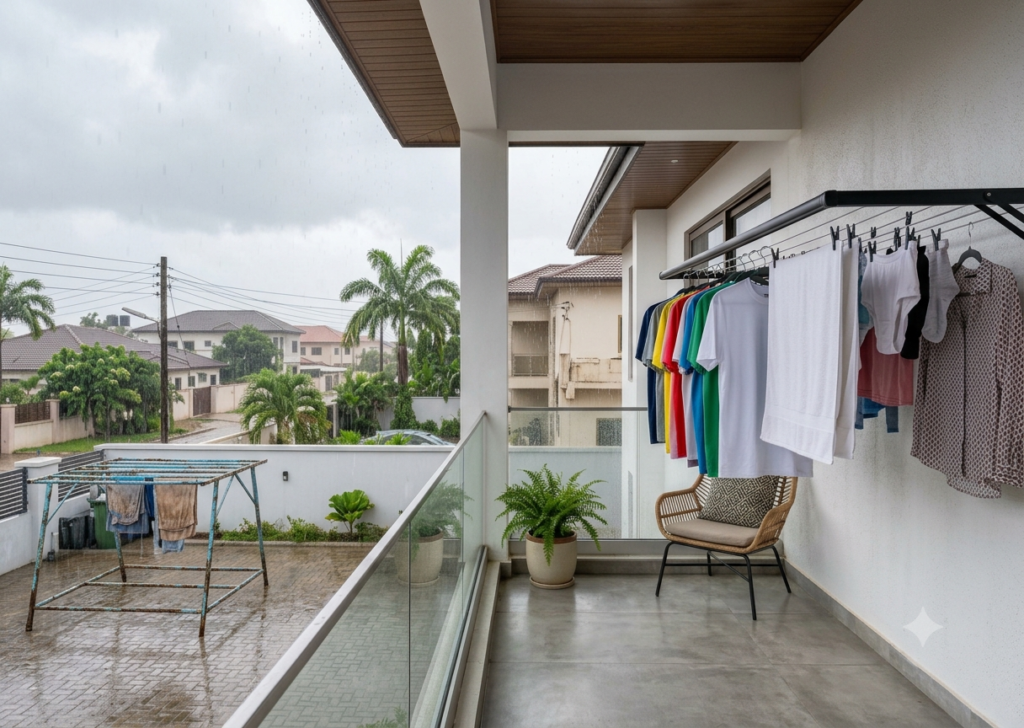
How to Dry Clothes During Accra’s Rainy Season: What Actually Works
If you’ve lived through a rainy season in Accra, you already know the routine.
You wash your clothes in the morning because the sky looks clear.
An hour later, dark clouds roll in.
The rain starts.
The clothes get soaked all over again.
You bring everything inside, only to discover there’s nowhere to hang them without turning your living room into a laundry area.
By the second day, your clothes still feel damp.
By the third day, some have developed that familiar musty smell that tells you they haven’t dried properly.
Sound familiar?
For many households across Accra, Tema, Cape Coast, Takoradi, Kumasi, and other parts of Ghana, drying clothes during the rainy season is one of the biggest everyday frustrations.
The good news is that it doesn’t have to be.
With the right drying location, better airflow, and a durable drying system designed for year-round use, you can keep your laundry routine running smoothly even when the weather refuses to cooperate.
Why Clothes Take Longer to Dry During Ghana’s Rainy Season
The challenge isn’t just the rain itself.
It’s the combination of:
- Higher humidity
- Reduced sunshine
- Lower airflow
- Frequent afternoon showers
- Damp outdoor conditions
When the air is already carrying a lot of moisture, water evaporates from your clothes much more slowly.
That means even if it isn’t raining, laundry can still take much longer to dry than it does during the dry season.
Why Portable Drying Racks Become Frustrating
Portable drying racks seem like a simple solution at first.
During the rainy season, however, they often create new problems.
They Occupy Valuable Indoor Space
Once the rain starts, many people move their drying rack into the living room, bedroom, hallway, or kitchen.
For the next two or three days, everyone has to walk around it.
In apartments and smaller homes, that can make the entire house feel cramped.
They Are Constantly Being Moved
One moment they’re outside.
The next they’re inside.
Then back outside when the sun appears.
Constantly moving a fully loaded drying rack soon becomes exhausting.
They Often Rust Over Time
Many inexpensive painted drying stands struggle to withstand months of repeated exposure to moisture.
Over time, paint chips away, rust begins to develop, joints become stiff, and the rack becomes less stable.
Replacing the same drying rack every few years can end up costing more than investing in a durable, professionally installed solution from the start.
What Actually Works During the Rainy Season?
After years of helping homeowners optimise their laundry spaces, one thing becomes clear:
It’s not just about the drying line.
It’s about where and how it’s installed.
The most effective rainy-season setups combine three things:
- Shelter from direct rainfall
- Good airflow
- A durable drying system
Let’s look at each one.
Use a Covered Balcony or Veranda
A covered balcony is often one of the best places to dry clothes during the rainy season.
It protects laundry from sudden showers while still allowing natural air to circulate.
Even on cloudy days, moving air helps moisture leave fabric more efficiently than stagnant indoor air.
If your balcony is covered, installing a wall-mounted foldable drying line allows you to use that space every day without sacrificing valuable floor area.
When you’re finished, the drying line folds neatly against the wall, leaving the balcony open again.
Make Better Use of Indoor Utility Areas
Not every home has a covered balcony.
Fortunately, indoor drying can work well when the space has good ventilation.
Suitable areas include:
- Utility rooms
- Laundry rooms
- Covered service corridors
- Well-ventilated verandas
- Dedicated laundry corners
Opening windows where practical and encouraging air movement can help clothes dry more comfortably during damp weather.
Improve Airflow Around Your Laundry
One of the biggest mistakes people make is hanging clothes too closely together.
Without enough space between garments, air cannot circulate effectively.
Instead:
- Leave small gaps between clothes.
- Avoid overlapping heavy fabrics.
- Spread towels fully open.
- Dry larger items separately where possible.
These small changes can make a noticeable difference.
Why Your Drying System Matters
Rainy weather places extra demands on drying equipment.
A drying line that performs well during the dry season may deteriorate much faster if it is constantly exposed to moisture.
This is why material quality becomes especially important.
Galvanised Steel for Better Corrosion Resistance
Galvanised steel is designed to resist corrosion better than ordinary untreated steel, making it a practical choice for outdoor laundry solutions exposed to changing weather conditions.
Powder-Coated Finishes for Added Protection
A quality powder-coated finish provides an additional protective layer while maintaining a clean, modern appearance.
Compared with many low-cost painted drying stands, a professionally fabricated powder-coated drying system is generally better equipped to withstand repeated exposure to damp conditions.
Why Wall-Mounted Drying Lines Perform Better in Wet Weather
For many homeowners, a wall-mounted foldable drying line installed beneath a covered balcony or veranda provides one of the most practical rainy-season laundry solutions.
Unlike portable racks, it:
- Doesn’t occupy valuable floor space.
- Doesn’t need to be carried indoors every time rain begins.
- Remains securely installed.
- Folds flat when not in use.
- Keeps balconies neat and organised.
It transforms an underused wall into a permanent drying area that works throughout the year.
Expert Insight from Starex Foldables
One thing our installation team often notices is that many homeowners focus on buying a bigger drying rack when the real issue is location. A well-positioned wall-mounted drying line installed under a covered balcony often outperforms a larger portable rack left in the open. Choosing the right installation point can make your laundry routine far more reliable during Ghana’s rainy months.
Why More Homeowners Are Upgrading Before the Rainy Season
Every year, as the rainy season approaches, many families begin looking for better ways to manage their laundry.
Instead of replacing another rusted drying stand, more homeowners are investing in permanent drying solutions that continue performing year after year.
Installing a durable drying system before the rains arrive means you are prepared before the weather becomes unpredictable.
Why Choose Starex Foldables?
Rainy-season laundry challenges are not solved by one-size-fits-all products.
Every home has a different layout, drying area, and available wall space.
Starex Foldables designs drying solutions that make the most of the space you already have.
Customers choose Starex Foldables because the company offers:
- Custom-made wall-mounted drying lines
- Foldable drying systems for compact homes
- Ceiling-mounted dryline solutions
- Galvanised and powder-coated fabrication options where appropriate
- Premium stainless steel and aluminium models
- Professional installation
- Apartment and family home solutions
- Practical recommendations based on each property’s layout
- Free installation
- Pay on Delivery for eligible projects
Rather than recommending a generic drying rack, the team helps homeowners create a drying area that works in every season.
Buying Guide
Before choosing a rainy-season drying solution, consider the following.
Is There a Covered Area Available?
Balconies, verandas, and utility areas often provide the most reliable locations.
How Much Laundry Does Your Household Produce?
Larger households may benefit from drying systems with greater hanging capacity.
Will the Materials Resist Damp Conditions?
Look for durable materials and quality finishes designed for long-term outdoor use.
Can the System Fold Away?
A foldable design helps preserve valuable living space when the drying area isn’t in use.
Is Professional Installation Included?
Correct installation helps ensure the drying line operates safely and efficiently.
Common Mistakes During the Rainy Season
Leaving Clothes Outside Too Long
Unexpected rain showers can quickly undo hours of drying.
Hanging Clothes Too Close Together
Poor airflow slows the drying process.
Relying on Rust-Prone Portable Racks
Repeated exposure to moisture can shorten the lifespan of lower-quality drying stands.
Waiting Until the Rainy Season Begins
Planning your drying solution before the wet season arrives makes laundry much easier once the weather changes.
Conclusion
Ghana’s rainy season doesn’t have to turn laundry day into a week-long challenge. While you can’t control the weather, you can control how and where your clothes dry. Choosing a covered location with good airflow and investing in a durable drying system can make a noticeable difference to drying times, household organisation, and the lifespan of your equipment.
For homeowners looking for a long-term solution, a professionally installed wall-mounted drying line under a covered balcony or veranda offers the convenience of year-round use without sacrificing valuable floor space.
Don’t wait until the rains arrive to rethink your laundry space. Starex Foldables designs and installs custom wall-mounted, ceiling-mounted, and foldable drying systems that help homeowners make the most of covered balconies, verandas, and indoor utility areas. With professional installation, durable fabrication, and solutions tailored to your home’s layout, you can enjoy a cleaner, more practical laundry setup in every season. Explore our Drying Lines collection or contact Starex Foldables today to find the right solution for your home.
Frequently Asked Questions
Choose a covered, well-ventilated area and use a durable drying system that keeps clothes protected from direct rainfall while allowing good airflow.
A covered balcony, veranda, or indoor utility area with good ventilation is often the most practical option.
When clothes remain damp for too long because of humidity or poor airflow, they can develop musty odours. Improving ventilation and spacing garments apart helps reduce this problem.
Yes. Installed beneath a covered area, they provide a permanent, space-saving solution that remains protected from direct rainfall.
Durable materials such as galvanised steel, quality powder-coated finishes, stainless steel, and aluminium are commonly chosen because they offer better resistance to outdoor conditions than many low-cost painted alternatives.